How Does Fat Obtain Produced In The Body Mouth-to-mouth Resuscitation And Emergency Treatment Postpartum pelvic floor recovery Training Schoolcpr And Emergency Treatment Training Camp The Paleo and Keto crowd could attempt to inform you that any training session or race can be fueled with fat. Yet just because you can press with a high-intensity session without carbohydrates does not make it an optimum strategy. Even if you increase fat oxidation during low-intensity training and slightly shift the point at which your body check here will begin liking carbohydrates, this technique is not suitable at high strengths. In regards to general health and wellness, fat is additionally essential to hormone production and nerve transmission that manage brain, cardio, sexual, metabolic, and body immune system functions.
Fat (body Fat)
FFAs are carried in the blood bound to albumin and are either oxidized in tissues by a process called beta-oxidation or converted to ketone bodies.While it's not possible to determine exactly where you'll first observe fat loss in your body, you can gain a few ideas by considering your household history and individual background with weight management.This procedure is specifically crucial if you're wanting to shed body fat, lose weight and boost your body composition.
The computer mice consumed and soaked up the regular amount of food, however they quickly burnt the calories. To recognize exactly how this message was sent out, the researchers carried out genetic testing of fruit flies. They located that a healthy protein called Pvf3 is necessary for fat storage in the fly larvae, which need to conserve energy in order to expand. This searching for pointed the researchers to the corresponding protein in computer mice, PDGF-CC. If Acetyl-CoA appears acquainted, it's since it is also produced when mitochondria use glucose as a fuel. After the initial stage of cardiovascular respiration, Acetyl-CoA is formed from the break down of glucose (through pyruvate).
Brownish Fat: The Mobile Heating System
By producing some hormonal agents and replying to others, fat communicates with other body organs throughout your body, as well as with your main nervous system. It regulates power supply and demand with hunger and satiety (sensation full) signals. It reacts to insulin by transforming excess blood glucose to lipids and keeping them away for future use. Adipose tissue also has its own active immune cells, which reply to particular stimulations by clearing out dead fat cells or generating an inflammatory response. The ability of your body to keep muscular tissue and liver glycogen, however, is restricted to roughly 1,800 to 2,000 calories well worth of energy, or sufficient gas for 90 to 120 minutes of continuous, energetic task. Skeletal muscle make up a significant section of day-to-day power expense, especially during task. Even refined useless cycles-- procedures in which molecules are continuously developed and damaged down-- take in power and produce warm. Brownish adipose cells are loaded with mitochondria-- the little power plants inside cells-- and include a healthy protein called UCP1 that permits them to transform chemical power straight right into heat.
How to trick your body right into melting kept fat?
This is since this sort of session does not call for the prepared power needed during higher-intensity workouts. Your body must be fine with even more fat and less carbs as fuel throughout area 1 and 2 sessions (long, slow-moving, distance training). The next step in the research study is to see if the process takes place the same way in individuals. Dr. Cox is doing experiments using human cells in a dish-- including macrophages and adipocytes. [newline] The truth that this system has remained through advancement throughout fruit flies and mice suggests a high possibility that it will certainly be true in human beings as well. Additional experiments in computer mice revealed that obstructing PDGF-CC avoided fat from being stored, even when macrophages were present. Fueling for long sessions can include including fat to your best carb resources. When you're in a long-distance exercise, you could pick options like single-serve nut butter pouches or bags of seeds and nuts for some on-the-go fat. Some athletes mix a set of home made path mix to incorporate fat and carbs-- a case of reducing overall carbs and replacing those calories with the required quantities of fats. The body is constantly searching for one of the most efficient method to supply energy, and when you crank up the pace, carbohydrates are the power path of least resistance. If you are short on stored carbohydrates or are not consuming carbohydrates you'll likely run into problems as the rate and range boost. But when coupled with GLP-1 drugs that suppress cravings, promoting energy expenditure could result in treatments that are a lot more effective at promoting weight reduction. People might have normally higher or lower set weights than others; their set points can be impacted by genes, aging, background of weight reduction and hormonal changes. The concept suggests that your collection point weight can rise yet seldom lower. It is easier to preserve your set factor weight because your body wishes to continue to be at that point-- not drop weight. There are lots of conditions of fat metabolism that present with significant and certain characteristics but are not talked about here as they are beyond the scope of lipolysis, specifically. These consist of, yet are not limited to, fat oxidation disorders (FAODs) such as MCAD deficiency or primary carnitine shortage and peroxisomal conditions such as Zellweger disorder and adrenoleukodystrophy. Body fat is mainly understood for storing and launching power and providing insulation.
Fuel Metabolic Rate And Endurance Exercise
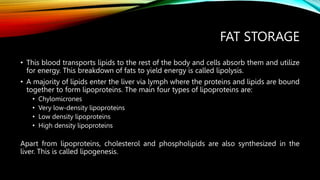
Fat, along with carbohydrates and healthy protein, is just one of the 3 primary macronutrients in the human diet. In order to make use of fat as energy, the body breaks down the fat (triglycerides) right into smaller sized fatty acids. These fats are then carried with the blood right into the muscle mass for gas. This process is referred to as "fat oxidation," aka, utilizing fat for fuel. They are used by the heart and skeletal muscles to preserve the restricted sugar for usage by the mind and erythrocytes.